
Table of Contents
- Why Teens Need a Different Approach to Acne Cleansing
- Salicylic Acid Cleanser for Sensitive Skin: What Makes It Safe for Teens
- How Often to Use Salicylic Acid Cleanser Without Overdoing It
- Salicylic Acid for Blackheads and Clogged Pores in Teen Skin
- Building a Teen Skincare Routine for Puberty Acne
- Common Mistakes Parents and Teens Make With Salicylic Acid
- When to See a Dermatologist Instead of Going It Alone
- Frequently Asked Questions
Last Updated: October 7, 2026
Why Teens Need a Different Approach to Acne Cleansing
Teenage acne isn't adult acne. Puberty triggers excess oil, but teen skin is also more reactive to harsh treatments because its barrier is still developing.
Most parents reach for whatever worked for them, or buy the strongest product thinking it works faster.
This is where a salicylic acid cleanser for teens changes the equation.

The right salicylic acid cleanser teens can use twice daily without irritation.
Salicylic Acid Cleanser for Sensitive Skin: What Makes It Safe for Teens
A salicylic acid cleanser for sensitive skin works by dissolving oil and dead skin cells in pores without damaging the skin barrier. This beta hydroxy acid penetrates oil-based buildup, the root cause of blackheads and clogged pores, while gentler formulations avoid the irritation of higher concentrations or scrubbing.
Teen formulations differ from adult ones in concentration, pH balance, and supporting ingredients, with hydrating elements and lower acid percentages that suit daily use.
Why Concentration Matters
Most over-the-counter salicylic acid products range from 0.5% to 2%. For teen skin just beginning to break out, 0.5% to 1% is typically sufficient; higher concentrations mean more irritation and barrier damage, not better results.
A lower concentration used consistently outperforms a harsh product used sporadically.
Formulation matters as much as percentage. Journee Bloom's Glow Wash ($28.00) offers gentle cleansing for every skin type with a lightweight formula that removes daily buildup without stripping moisture.
Signs Your Teen's Skin Is Reacting Poorly
Not every reaction means salicylic acid doesn't work. Some irritation is normal during the first 1-2 weeks as skin adjusts, but persistent problems signal the product isn't right. Watch for intense redness or burning after cleansing, excessive flaking beyond the first week, worsening breakouts after two weeks, visible barrier damage, or allergic reactions like hives or swelling.
How Often to Use Salicylic Acid Cleanser Without Overdoing It
Most teens should use a salicylic acid cleanser once or twice daily, depending on skin type and sensitivity. Once daily suits sensitive skin; twice daily works for oily skin that tolerates it well. The real question is how to get there without a bad first week, since most irritation happens when teens start at full strength, twice a day, on day one.
A Gradual Introduction Schedule
A common approach that dermatologists and estheticians suggest for teen skin:
- Week 1: Use the salicylic acid cleanser every other evening. Use a plain gentle cleanser on the other days.
- Week 2: Move to every evening, still using a plain cleanser in the morning.
- Week 3: If skin is calm, add the morning use. If skin is dry or tight, stay at once daily.
This schedule gives the barrier time to adapt. Teens who jump straight to twice daily are the ones most likely to end up red, flaky, and ready to quit by day ten.
The One-Active Rule
The mistake most teens make: using it more than twice daily or combining it with other actives.
A simple rule: one active ingredient per routine. If you're using a salicylic acid cleanser, skip the salicylic acid toner, and use any spot treatment only on active breakouts, not the entire face. Morning cleansing removes overnight oil; evening cleansing removes dirt, sunscreen, and daily buildup.
How to Tell Irritation From a Normal Adjustment
Watch for these warning signs:
- Intense redness or burning immediately after cleansing
- Excessive dryness, flaking, or peeling beyond the first week
- Worsening breakouts after two weeks of consistent use
If these occur, switch to a gentler cleanser without active ingredients for a few days to let the barrier recover. Then reintroduce a lower-concentration product or try a different active ingredient like azelaic acid or mandelic acid, which some teens tolerate better.
When a Parent or Clinician Should Step In
Teens are not small adults, and some situations call for an adult to make the call:
- Painful, deep, or cystic pimples. These can scar, and over-the-counter cleansers won't reach them.
- Acne on the chest or back. Body acne often needs a different approach than facial cleansing.
- Signs of hormonal acne. Breakouts along the jawline, chin, and lower cheeks that flare with the menstrual cycle may point to a hormonal driver.
A parent can also help by keeping the routine simple: two or three well-chosen products used consistently beat a shelf full of actives used randomly.
Salicylic Acid for Blackheads and Clogged Pores in Teen Skin
Blackheads and clogged pores form when oil, dead skin cells, and bacteria accumulate inside follicles (the American Academy of Dermatology). Salicylic acid dissolves this buildup by breaking down the oil that hardens inside the pore, making it effective for the comedones and congestion that define teen acne. Unlike benzoyl peroxide, which targets acne bacteria, salicylic acid addresses the mechanical clogging, so it's often the better first choice for teens whose main concern is blackheads on the nose, chin, or forehead rather than inflammatory breakouts.
Salicylic Acid vs. Benzoyl Peroxide: Which Fits Which Breakout
Here's the practical split between the two, based on how each active works.
| Concern | Salicylic acid | Benzoyl peroxide |
|---|---|---|
| Blackheads and clogged pores | First choice, dissolves the oil plug | Limited effect on non-inflamed comedones |
| Whiteheads | Helpful | Helpful |
| Red, inflamed pimples | Moderate | First choice, reduces acne bacteria |
| Cystic or nodular acne | Not enough on its own | Often still not enough; needs a clinician |
| Sensitive or reactive skin | Usually better tolerated | More likely to cause dryness and peeling |
| Bleaching of towels and clothing | No | Yes, a real problem for teens |
A common pattern: a teen with blackheads but few red bumps does better on a salicylic acid cleanser, while one with inflamed, tender pimples does better with benzoyl peroxide. Many teens have both, which is why a clinician may recommend alternating rather than stacking.
Why Some Teens Need to Avoid Benzoyl Peroxide
Benzoyl peroxide is effective, but it isn't right for everyone. Reasons to consider an alternative:
- Irritation and peeling. It's one of the more drying over-the-counter actives, and young skin often reacts with redness and flaking.
- Bleaching. It permanently bleaches pillowcases, towels, and clothing, a frequent reason teens switch.
- Allergy. True allergy is uncommon but real, showing up as itching, swelling, or a rash rather than ordinary dryness.
For these teens, salicylic acid, azelaic acid, and adapalene are the usual alternatives. Salicylic acid clears clogs; azelaic acid calms redness and evens tone; adapalene speeds cell turnover and is the only non-prescription retinoid available over the counter.
What Results Actually Look Like, Week by Week
Results typically appear within 2-4 weeks of consistent use. Pores don't disappear, but they clear visibly as buildup dissolves, and teens notice smoother texture and fewer blackheads.
A realistic timeline:
- Weeks 1-2: Little visible change. Some teens see mild dryness or a brief "purge" as clogs surface. This is not failure.
- Weeks 2-4: Blackheads on the nose and chin start to look less dark. Texture improves.
- Weeks 4-8: Meaningful clearing of non-inflamed breakouts. This is the point to judge whether the product is working.
Combining Salicylic Acid With Other Steps
Combining salicylic acid with gentle exfoliation (a soft washcloth or gentle physical exfoliant once weekly) can accelerate results, but the cleanser should be the primary tool.
What to avoid stacking with a salicylic acid cleanser:
- A second salicylic acid product (toner, pads, or spot treatment)
- Benzoyl peroxide at the same time of day
- Retinoids in the same routine, unless a clinician has set up a schedule
What pairs safely: a gentle non-active cleanser on off days, a lightweight moisturizer, and morning sunscreen. Sunscreen matters because exfoliating actives make skin more sun-sensitive, and unprotected exposure worsens the dark marks that linger after a pimple heals.
Building a Teen Skincare Routine for Puberty Acne
A teen's skincare routine doesn't need to be complicated; simplicity is what makes teens stick with it. Most dermatologists recommend a three-step foundation: cleanse, treat, moisturize.
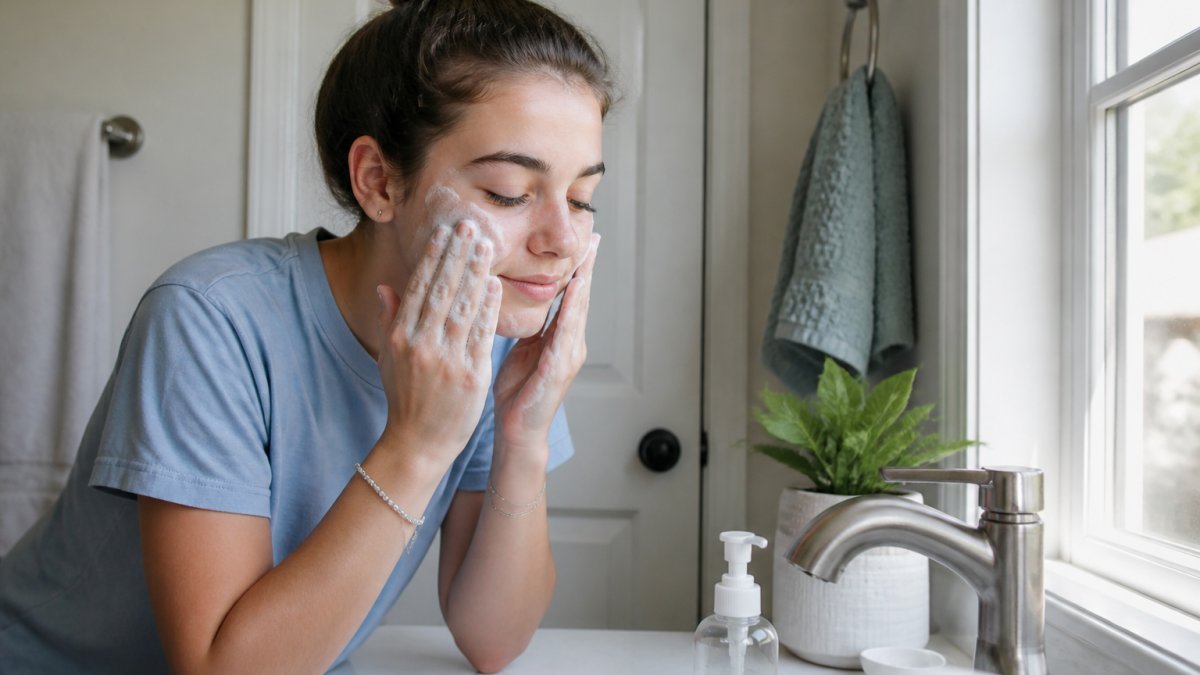
The Right Cleanser Matters Most
The cleanser is the foundation. Used twice daily, it has the most impact on skin health and barrier function, and a harsh one sets the tone for irritation no moisturizer can fully repair.
For teens with oily or combination skin starting to break out, Journee Bloom's Glow Wash is formulated for this transition.
For teens with sensitive, dry, or easily irritated skin, the Glow Wash ($28.00) is a gentle option that works for every skin type.
The ritual matters too.
Moisturizer Is Not Optional
This is where most teen acne routines fail. Teens (and parents) assume acne-prone skin shouldn't be moisturized.
A lightweight, non-comedogenic moisturizer applied to damp skin after cleansing supports the barrier and reduces irritation from actives.
Pairing your cleanser with a compatible moisturizer creates a complete routine that works. Journee Bloom's approach emphasizes this pairing: the cleanser removes buildup, and the moisturizer restores balance.
Common Mistakes Parents and Teens Make With Salicylic Acid
The second mistake: combining salicylic acid with other actives. Adding benzoyl peroxide, retinoids, or vitamin C overwhelms the barrier, leaving redness, peeling, and sensitivity that makes teens think the products don't work when they're simply using too much.
A third mistake is not adjusting frequency based on skin response. If irritation appears, reduce to once daily or switch to a gentler formulation rather than stopping cleansing altogether.
When to See a Dermatologist Instead of Going It Alone
Not all teen acne responds to over-the-counter cleansers; some breakouts signal deeper issues requiring professional evaluation.
A dermatologist visit is warranted if:
- Acne covers large areas of the face, chest, or back
- Breakouts are painful, cystic, or leave scars
- Over-the-counter treatments haven't improved skin after 8-12 weeks of consistent use
For mild to moderate teen acne, a gentle salicylic acid cleanser teens can manage the condition effectively.
Teenage acne is frustrating, but manageable with the right approach. The goal isn't flawless skin, it's building healthy habits that support confidence during a transitional time.
At Journee Bloom, we created our cleansers with this reality in mind.
Frequently Asked Questions
Is salicylic acid cleanser safe for teenagers to use?
Yes, when used correctly. Salicylic acid at 0.5-2% concentration is generally considered safe for teen skin and is recommended by dermatologists for acne-prone adolescents. The key is starting with a lower concentration and using it no more than once or twice daily. If your teen has very sensitive skin or has reacted poorly to other products, introduce it gradually and watch for signs of irritation like excessive dryness or redness. Many teens tolerate it well when paired with a good moisturizer.
How often should a teen use a salicylic acid face wash?
Most teens should start with once daily, typically at night, then gradually increase to twice daily if their skin tolerates it well. Begin with a gentler cleanser like the Journee Bloom Glow Wash ($28) and observe how your teen's skin responds over 2-3 weeks. If they experience dryness, irritation, or flaking, pull back to once daily or every other day. Overuse can damage the skin barrier and cause more inflammation, so less frequent use with consistency beats daily use that irritates.
Can salicylic acid cleanser help with blackheads and clogged pores?
Yes. Salicylic acid works by penetrating pores and breaking down the buildup of dead skin cells and oil that cause blackheads and comedones. For best results on blackheads, consistency matters more than strength. Using a gentle salicylic acid cleanser 4-5 times per week can gradually reduce blackheads over 6-8 weeks. Pair it with a non-comedogenic moisturizer to avoid over-drying, which can actually trigger more oil production and worsen clogged pores.
What should a teen do if salicylic acid cleanser irritates their skin?
Stop use immediately and switch to a gentle cleanser like the Journee Bloom Glow Wash ($28) for a week to let the skin barrier recover. If irritation was mild, try reintroducing salicylic acid at a lower concentration or less frequently (every other day or twice weekly). If irritation was severe or persistent, skip salicylic acid and explore other actives like azelaic acid or mandelic acid, or see a dermatologist. Not every teen's skin chemistry works with salicylic acid, and that's normal.