
Table of Contents
- Why Teenage Skin Needs a Different Approach
- The Science Behind Botanical Skincare for Teens
- Natural Ingredients for Sensitive Teen Skin
- Gentle Skincare for Teens: What to Avoid
- How to Start a Teen Skincare Routine with Botanical Products
- Addressing Common Teen Skin Concerns Naturally
- The Psychological Impact of Skincare Trends on Teens
- Frequently Asked Questions
Last Updated: September 16, 2026
Why Teenage Skin Needs a Different Approach
Teenage skin is not simply adult skin in a smaller body. It runs on a different set of rules, and treating it like adult skin is the fastest way to make it worse. This guide from Journee Bloom explains why botanical skincare works for teens, what makes young skin unique, and how to build a routine that supports it instead of fighting it.
During puberty, hormonal fluctuations ramp up sebum production, which is why foreheads, noses, and chins start looking shiny almost overnight. At the same time, the skin barrier function is still maturing. A stripped, irritated barrier triggers more inflammation, and inflammation is the engine behind most acne. According to pediatric dermatology guidance from the American Academy of Dermatology, harsh scrubbing and strong actives often backfire on young skin.
That combination, more oil plus a more fragile barrier, is exactly why gentle, plant-based formulas tend to outperform aggressive ones.
The Science Behind Botanical Skincare for Teens
Botanical skincare is the use of plant-derived ingredients such as aloe vera, chamomile, and calendula to calm, hydrate, and support the skin's natural barrier. For teens, the goal is not stronger actives; it is a balanced microbiome and a barrier that holds moisture in.
- Sebum production stays in check without being shut down. Gentle cleansing removes excess oil while leaving the barrier intact.
- Inflammation calms. Ingredients like chamomile and calendula help reduce the redness that follows a breakout.
- pH balance is preserved. Botanical cleansers typically sit closer to skin's natural pH, so they do not trigger the tight, stripped feeling that follows harsh soaps.
Natural Ingredients for Sensitive Teen Skin
Natural ingredients for sensitive teen skin fall into two jobs: calming and hydrating. Get both right and most irritation resolves on its own.
Calming Botanicals: Aloe Vera, Chamomile, and Calendula
Aloe vera delivers lightweight hydration while soothing redness. Chamomile contains antioxidants that help quiet irritation after a breakout. Calendula, a mainstay in gentle formulations, supports the skin's own repair process. Together, these botanical extracts make a formula feel comfortable on skin that reacts to everything else.
Hydration Heroes: Hyaluronic Acid and Panthenol
Hyaluronic acid attracts and holds moisture, which matters because dehydrated skin produces more oil to compensate. Panthenol, also called pro-vitamin B5, helps skin feel smooth and comfortable. Journee Bloom's Glow Serum pairs both in a lightweight formula designed for young skin, and it layers easily under a daily moisturizer.

Gentle Skincare for Teens: What to Avoid
Look for the word "non-comedogenic" on any moisturizer or serum. It means the formula is less likely to clog pores, which matters most on an acne-prone forehead and chin.
How to Start a Teen Skincare Routine with Botanical Products
A teen routine works best with three steps, twice a day, and nothing more. Consistency beats complexity every time. What most guides skip is that the same three steps look different depending on where a teen is in puberty. A 12-year-old with a still-maturing barrier needs a lighter touch than a 16-year-old managing persistent oiliness, and the routine should shift as hormones do.
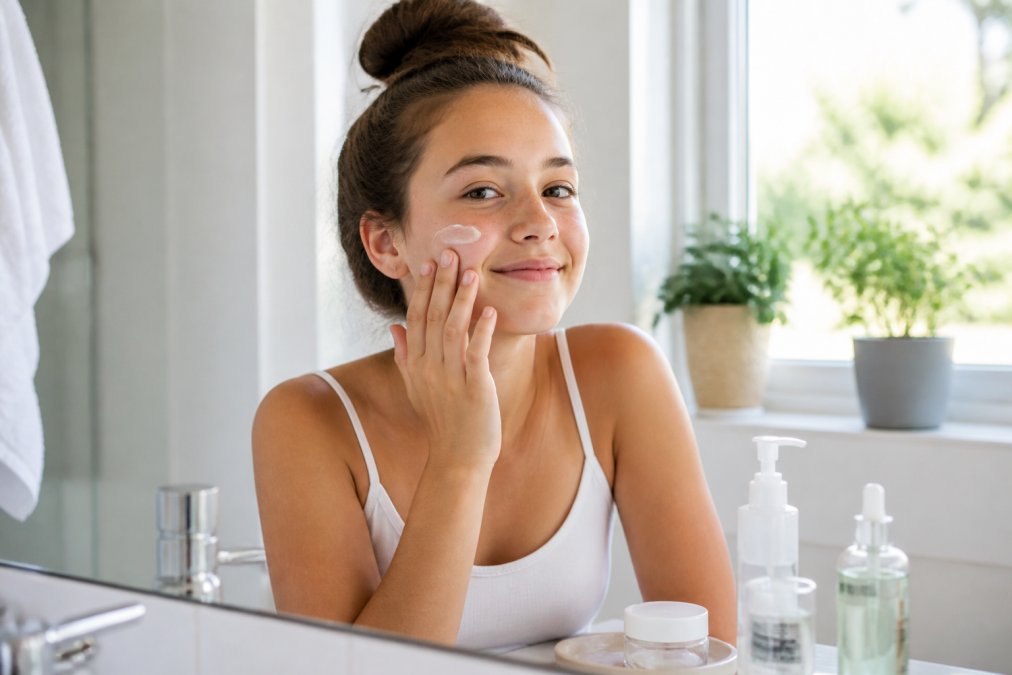
Step 1: Cleanse Gently
Massage one to two pumps of a gentle cleanser onto damp skin using circular motions for about 30 seconds, then rinse with lukewarm water. Hot water strips the barrier and triggers more oil production, so lukewarm is the target even in winter. Journee Bloom's Glow Wash works for every skin type, and it cleans without leaving that tight, stripped feeling.
Step 2: Hydrate and Protect
Apply a hydrating serum to slightly damp skin within about a minute of cleansing, while the barrier is still receptive. Follow with a lightweight moisturizer to lock that moisture in. Finish with sun protection every morning, since UV exposure worsens pigmentation left behind by old breakouts and can darken post-acne marks for months.
Step 3: Stay Consistent
Morning and night, every day. A simple routine done consistently outperforms a complicated one done twice a week. This is where the Starter Glow Kit earns its place: it includes the cleanser, moisturizer, mist, and step-by-step video tutorials, so there is no guessing about what goes where.

Adjusting the Routine as Skin Changes
Puberty is not a single event; it is a multi-year shift. A routine that worked at 13 may feel too light at 15, or too drying at 17. Watch for three signals: skin that feels tight after cleansing (switch to a creamier wash), breakouts clustering on the chin and jawline (a hormonal pattern that responds to consistency, not stronger actives), and new sensitivity to products that used to be fine (scale back to cleanser, moisturizer, and sunscreen until the barrier settles).
| Step | Product Type | When | Time Needed |
|---|---|---|---|
| Cleanse | Gentle face wash | AM and PM | 1 minute |
| Hydrate | Hyaluronic serum | AM and PM | 30 seconds |
| Moisturize | Lightweight cream | AM and PM | 30 seconds |
| Protect | Sunscreen | AM only | 1 minute |
Addressing Common Teen Skin Concerns Naturally
Acne, oiliness, and sensitivity usually trace back to the same root: an irritated barrier and excess sebum. Botanical formulas address both without the rebound effect that strong actives can cause, but they are not a magic eraser. Understanding what each concern actually is makes it easier to pick the right response instead of cycling through products.
Breakouts
A pimple forms when sebum, dead skin cells, and bacteria collect inside a pore. Hormones drive the sebum; the pore does the rest. For mild breakouts, stick with non-comedogenic moisturizers and resist the urge to spot-treat aggressively. If a teen wants an active ingredient, two well-studied over-the-counter options are salicylic acid (a beta-hydroxy acid that helps unclog pores) and benzoyl peroxide (which reduces acne-causing bacteria).
Oiliness
Cleanse twice daily but never more. Over-washing strips the barrier, and a stripped barrier produces more oil to compensate. Blotting papers during the day are fine and do not disrupt the routine. A lightweight gel moisturizer is often a better fit for oily skin than skipping moisturizer entirely, because dehydrated skin ramps up sebum production.
Sensitivity and Redness
Patch-test any new product on the inner arm for two days before it touches the face. Introduce one new product at a time, with about a week between additions, so it is clear what caused a reaction if one appears. Botanical ingredients like chamomile and calendula are generally well tolerated, but "natural" does not mean "hypoallergenic", essential oils and plant extracts can still trigger contact dermatitis in some people.
When to See a Dermatologist
As documented by the National Institute of Arthritis and Musculoskeletal and Skin Diseases, acne is driven by hormones, oil, and clogged pores together, which is why no single product fixes it overnight. If breakouts are deep, painful, leaving dark marks, or affecting a teen's confidence to the point they avoid activities, that is the signal to see a dermatologist rather than keep experimenting.
The Internal Side: Diet and Hydration
Most teen skincare guides stop at the bathroom counter, but what happens in the kitchen matters too. Drinking enough water supports overall skin hydration, though it will not clear acne on its own. A diet heavy in high-glycemic foods, sugary drinks, white bread, processed snacks, is associated with more frequent breakouts in some teens, and swapping some of those for whole grains, vegetables, and protein is a low-risk change worth trying.
The Psychological Impact of Skincare Trends on Teens
Skincare trends on social media push ten-step routines and strong acids at an age when skin needs neither. The result is a generation of teens who feel like their skin is a problem to be fixed rather than a part of them to be cared for.
Frequently Asked Questions
Why is botanical skincare considered safer for teenage skin?
Botanical skincare is often gentler because it avoids harsh synthetic fragrances and irritants that can disrupt the skin barrier. Teen skin is still developing, so it's more sensitive to strong ingredients. Plant-based extracts like aloe vera and chamomile can soothe inflammation and support the microbiome without stripping natural oils. This makes botanical skincare a safer choice for maintaining balance and reducing the risk of irritation.
Can botanical skincare effectively handle acne-prone teen skin?
Yes, many botanical ingredients have anti-inflammatory properties that help calm acne without over-drying. For example, calendula and chamomile reduce redness. However, severe acne may require a dermatologist's care. A consistent routine with non-comedogenic botanical products can support skin barrier function.
What should parents look for in natural skincare for tweens and teens?
Look for products labeled non-comedogenic. Avoid synthetic fragrances, parabens, and phthalates. Key ingredients like aloe vera, chamomile, and calendula are great for soothing sensitive skin. A simple routine with a gentle cleanser, hydrating serum, and lightweight moisturizer is ideal. Brands like Journee Bloom offer starter kits designed specifically for young skin.
How does a simple botanical routine support long-term skin health?
A simple routine prevents overwhelming young skin and encourages consistency, which is key for long-term habits. Botanical ingredients support the skin barrier and pH balance, reducing sensitivity and inflammation over time. By avoiding harsh chemicals, teens can maintain a healthy microbiome and natural glow. Starting with gentle products helps them learn to care for their skin without promoting unrealistic standards or causing damage.
Teen skin changes fast, and the products meant for adult skin often make that transition harder. Journee Bloom formulates gentle, botanical skincare specifically for tweens and teens, with esthetician-created formulas, private video tutorials, and simple three-step routines that build healthy habits instead of pressure. Start with the Starter Glow Kit and give your teen skin care that supports confidence from day one.