
Table of Contents
- Why Teen Skincare Consistency Matters
- Build a Simple Skincare Routine for Teens
- Teen Skincare Routine Checklist: Track Progress Daily
- How to Talk to Teens About Skincare Without Pressure
- How Long Does It Take to Build a Skincare Habit
- Troubleshooting: When Teens Skip Their Routine
- Make Skincare Feel Like Self-Care, Not a Chore
- Frequently Asked Questions
Last Updated: October 8, 2026
Why Teen Skincare Consistency Matters
Building a skincare routine during the teen years sets the foundation for lifelong skin health, it's about a habit that sticks, not the perfect product.
The problem isn't laziness, nobody teaches them why consistency matters.
Teen skincare consistency doesn't mean a complicated 10-step routine. It means washing your face twice daily, moisturizing, and protecting your skin from the sun. Do that for a few weeks, and you'll see the difference.
Build a Simple Skincare Routine for Teens
The biggest mistake is overcomplicating things. Teens don't need serums, essences, and multiple actives, they need a routine they can do daily without it feeling like a burden.
A simple routine has three core steps:
- Cleanse, Remove dirt, oil, and buildup with a gentle cleanser
- Moisturize, Hydrate skin with a lightweight moisturizer
- Protect, Apply sunscreen during the day
That's it. Everything else is optional.

Consistency beats complexity: a teen who cleanses, moisturizes, and uses sunscreen daily will have better skin than one with a fancy 8-step routine they do twice a week.
Morning Routine Essentials
Start the day with a quick 2-minute routine.
Step 1: Cleanse with a gentle cleanser
Wash with lukewarm water and a gentle cleanser, using fingertips rather than a washcloth or brush.
Step 2: Apply a lightweight moisturizer
Pat skin dry, then apply a pea-sized amount of moisturizer while skin is still slightly damp.
Choose a lightweight moisturizer that absorbs quickly, heavy creams feel greasy and discourage consistency.
Step 3: Apply sunscreen
This is non-negotiable.
Daily sun protection prevents damage that shows up years later (the American Academy of Dermatology).
Evening Routine Essentials
The evening routine is slightly longer, about 3-4 minutes total.
Step 1: Cleanse
Wash your face as in the morning to remove makeup, sunscreen, dirt, and oil from the day.
Step 2: Apply a hydrating mist (optional)
A lightweight hydrating mist adds moisture, spray it on and let it dry naturally. Helpful if skin feels dry.
Step 3: Moisturize
Apply moisturizer while skin is still slightly damp, especially at night, when skin repairs itself.
Step 4: Treat occasional breakouts (if needed)
For acne-prone skin, apply acne patches or spot treatments only where needed, not all over the face.
Teen Skincare Routine Checklist: Track Progress Daily
Tracking progress keeps teens motivated, when they see their skin improving, they stick with the routine.
Use this simple checklist to monitor daily habits:
| Step | Morning | Evening | Notes |
|---|---|---|---|
| Cleanse | ☐ | ☐ | Use gentle cleanser, never skip |
| Moisturize | ☐ | ☐ | Apply while skin is damp |
| Sunscreen | ☐ | , | Morning only, SPF 30+ |
| Hydrating Mist | , | ☐ | Optional, use if skin feels dry |
| Acne Treatment | , | ☐ | Only if needed for breakouts |
Print this checklist, post it in the bathroom, and check off each step. After 30 days, your teen will notice clearer, calmer skin.
Track more than just completion. Have your teen note how their skin feels:
- Does it feel hydrated or dry?
- Are there fewer breakouts?
- Is redness improving?
Visible progress is the best motivator for teen skincare consistency.
How to Talk to Teens About Skincare Without Pressure
This is where most parents get stuck. Bring up skincare the wrong way and teens shut down. The conversation isn't about appearance, it's about health, autonomy, and confidence.
Start with autonomy, not rules. Don't say, "You have to do your skincare routine." Instead, try: "Your skin is changing right now, and a simple routine can help you feel more confident.
Teens respond when they feel heard. Ask what bothers them most, oiliness, breakouts, dryness, and build the routine around their concerns.
A Simple Script for the First Conversation
Most parents either avoid the topic or lead with criticism. Try a three-part conversation:
- Ask, don't tell. "What bothers you most about your skin right now?" Let them name it. If they say "nothing," drop it and revisit in a week.
- Offer a small experiment. "Want to try one thing for two weeks and see if it helps?" One product, one step, not a full routine.
- Set a check-in, not a deadline. "Let's look at it together next Sunday." This gives them ownership and a natural off-ramp.
Avoid Appearance-Focused Language
Never say things like:
- "You need to do this so you look better"
- "Your skin looks bad right now"
- "This will make you prettier"
Instead, use health-focused language:
- "This routine keeps your skin calm and balanced"
- "Sunscreen protects your skin from damage"
- "Moisturizing helps your skin feel comfortable"
Let Them Choose Their Products
Let your teen pick the cleanser and moisturizer they like, the single most effective autonomy lever you have.
Give them a budget: "You can choose any gentle cleanser and moisturizer under $25 total." The constraint teaches label-reading, and the choice makes them more likely to use what they picked.
Respect Privacy and Independence
Skincare is often one of the first areas where teens want control. Avoid:
- Standing in the bathroom during their routine
- Checking whether they washed their face
- Commenting on their skin daily
Instead, ask once a week: "How's the routine going?" If they say fine, leave it. If they say they skipped, respond with "No worries, want to get back to it tonight?"
When to Step In vs. Step Back
Step back when:
- They're doing the routine most days
- They're choosing their own products
- They're asking questions on their own
Step in when:
- They're in pain or distress about their skin
- They're picking or scratching at breakouts
- They've stopped entirely and seem frustrated
In those cases, the conversation shifts from routine to support. "I noticed you seem frustrated with your skin. Want to see a dermatologist or esthetician who can help?"
Normalize the Routine as Self-Care
Frame skincare as something they do for themselves, not something you're making them do. "This is your time to take care of yourself" feels very different from "You need to wash your face."
The Journee Bloom Starter Glow Kit includes a private video tutorial where Journee walks through each step. Watching someone explain the routine often resonates better than a parent's explanation.

How Long Does It Take to Build a Skincare Habit
Most teens expect results overnight. Setting realistic expectations prevents disappointment and dropout.
A skincare routine takes about 3-4 weeks to become automatic, and forgetting sometimes during that window is normal.
Here's what to expect:
Weeks 1-2: The novelty phase. Everything feels new and exciting. Consistency is usually high. Skin might look slightly better, but not dramatically.
Weeks 3-4: The habit-building phase. The routine starts to feel automatic.
Weeks 5-8: The habit phase. The routine feels normal, like brushing teeth. Skin is noticeably calmer and clearer.
Weeks 8+: The lifestyle phase. Skincare is just part of their day. They do it without thinking about it.
Troubleshooting: When Teens Skip Their Routine
Missed days happen. The goal is to get back on track quickly without shame or guilt. Here's how to handle the situations that actually derail teen routines.
The 5 Most Common Skip Triggers, and What to Do
1. Too busy in the morning
Simplify to cleanser and moisturizer, a 60-second routine beats no routine.
2. Forgets at night
Set a phone reminder or tie it to an existing habit like brushing teeth.
3. Doesn't see results yet
Remind them skin takes time and show progress photos if available. Teens often quit at week three, right before results show.
4. Products feel uncomfortable
The formula may not suit their skin, try a different texture. A greasy moisturizer or tight-feeling cleanser kills consistency faster than forgetfulness.
5. Feels like a chore
Make it fun with music, candles, or customization.
Reset Plans for Real-Life Scenarios
After a sleepover: Rinse with water, apply whatever moisturizer is available, and resume the next night. One missed night doesn't undo weeks of consistency.
During travel: Pack a simplified kit, cleanser, moisturizer, sunscreen. Skip actives; the goal is maintenance, not progress.
During illness: If they're sick, skip the routine entirely. Rest matters more. Resume when they feel better.
After a long break (a week or more): Don't restart the full routine.
The Emotional Reset After a Missed Day
The biggest risk isn't the missed day, it's the shame spiral that follows. Guilt makes teens more likely to quit entirely.
When your teen misses a day, don't make it a big deal. Say, "No worries, let's get back to it tonight." Shame and pressure backfire.
If they consistently skip evenings, drop the evening routine to just moisturizer. A simple routine they actually do beats a perfect routine they skip.
When to Simplify vs. When to Seek Help
Simplify when:
- They're skipping more than twice a week
- They say the routine takes too long
- They're overwhelmed by too many steps
Seek professional help when:
- Acne is painful, cystic, or leaving scars
- They're avoiding social situations because of their skin
- They've been consistent for 8+ weeks with no improvement
- They're picking or scratching at their skin compulsively
A dermatologist or pediatric dermatologist can offer prescription treatments a basic routine can't. For moderate to severe acne, over-the-counter products often aren't enough, that's not a failure of consistency.
The goal is progress, not perfection.
Make Skincare Feel Like Self-Care, Not a Chore
Teens who view skincare as self-care stick with it. Teens who view it as a chore quit.
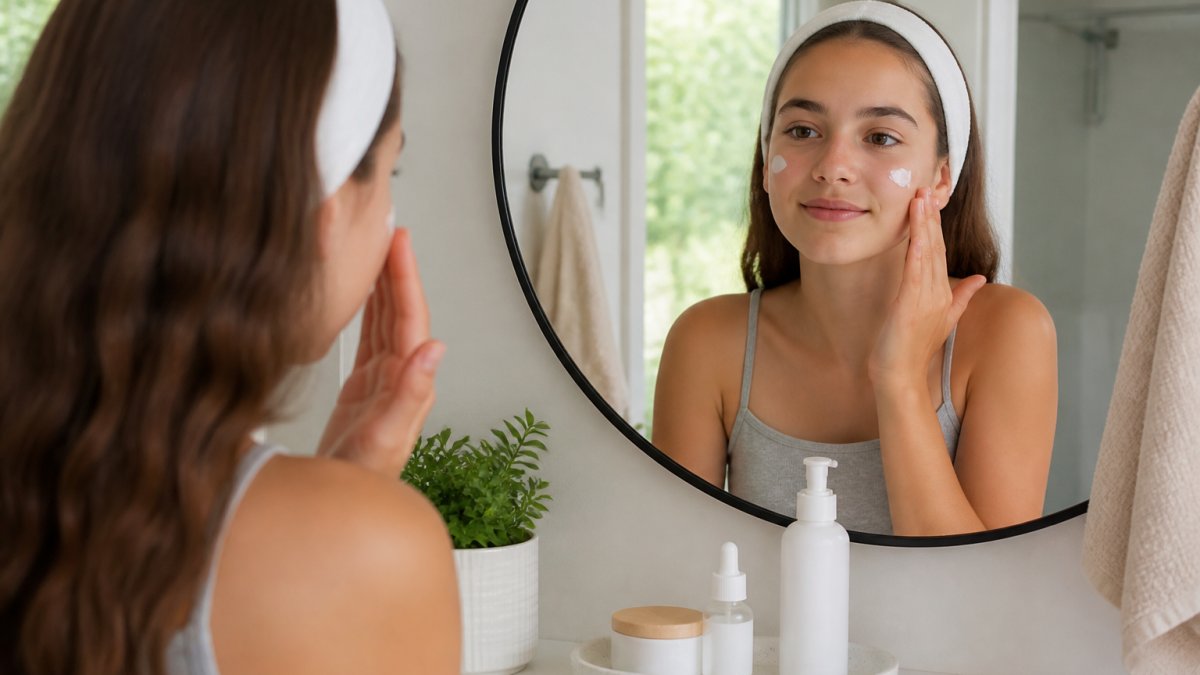
Self-care means doing something nice for yourself because you deserve it.
Let them customize. Some teens like face masks, others sheet masks or a hydrating mist.
The products matter less than the mindset.
Building teen skincare consistency is one of the most valuable habits you can help your child develop.
Start with a simple routine: cleanse, moisturize, and protect with sunscreen.
The Journee Bloom Starter Glow Kit includes everything your teen needs to build healthy skincare habits, plus private video tutorials that walk them through each step. It's designed specifically for young skin and created by esthetician moms who understand what actually works for teens. Shop now and help your teen start their skincare journey with confidence.
Frequently Asked Questions
How long does it take to build a consistent skincare habit?
Most habits take 21 to 66 days to form, depending on the person and how complex the routine is. For teen skincare, starting with just two steps (cleanse and moisturize) makes consistency easier to achieve within 3-4 weeks. Once that feels automatic, teens can gradually add sunscreen or targeted treatments. The key is patience, visible skin improvements often take 6-8 weeks, so setting realistic timelines helps teens stay motivated.
What should a basic teen skincare routine checklist include?
A teen skincare routine checklist should cover: morning cleanse, morning moisturizer, morning sunscreen; evening cleanse, evening moisturizer. Optional additions include a hydrating mist for midday refreshment or acne patches for occasional blemishes. The Journee Bloom Starter Glow Kit includes all essentials plus fun extras like sheet masks and cooling patches to make the routine feel special, not overwhelming.
How do I talk to my teen about skincare without making them feel self-conscious?
Frame skincare as self-care and skin health, not appearance-fixing. Use language like 'let's keep your skin comfortable and hydrated' rather than 'you have bad skin.' Involve them in choosing products they like the feel and scent of. Avoid comparisons to peers or celebrities. Share your own skincare routine to normalize it as a daily habit everyone maintains, not something only teens with 'problem skin' need to do.
My teen keeps forgetting their skincare routine. What's the best way to remind them?
Attach the routine to existing habits rather than nagging. Suggest they cleanse right after brushing their teeth or moisturize while listening to music. Use phone reminders they set themselves, ownership works better than parent-driven alerts. Make it visible: keep products in a cute bag on their bathroom counter. Celebrate consistency with small rewards (extra screen time, a face mask night) rather than punishing skipped days, which builds resentment.