
Table of Contents
- Why 12 Is the Right Age to Start Skincare
- Identifying Your Child's Skin Type First
- Simple Skincare Routine for Tweens: The 3-Step Daily Method
- Safe Skincare Ingredients for Teens (and What to Avoid)
- How to Treat Tween Acne Without Overdoing It
- Skincare Tips for 12 Year Olds: Budget-Friendly and Consistent
- Conclusion
Last Updated: August 30, 2026
Why 12 Is the Right Age to Start Skincare
Twelve is not too young for a skincare routine. A simple, age-appropriate routine started at 12 protects the skin barrier before problems compound and builds habits that last. Children who learn gentle, consistent care early are far less likely to reach for harsh adult products when their first breakout appears.
How Hormonal Changes Affect Pre-Teen Skin
Puberty triggers a surge in androgens, hormones that increase sebum production in the skin's oil glands, creating excess oil on the face, particularly in the T-zone, which leads to clogged pores and breakouts. Skin sensitivity also rises during this period; the skin barrier becomes more reactive and less stable than it will be in adulthood. According to the American Academy of Dermatology's guidance on teen acne, early gentle intervention reduces the severity of breakouts over time.
Why Social Media Skincare Trends Are a Problem for Tweens
Platforms like TikTok and Instagram push adult anti-aging products directly to 12-year-olds. Retinol, glycolic acid, vitamin C serums, and peptide complexes are appearing in middle schoolers' bathrooms because influencers made them look aspirational. These products are formulated for adult skin dealing with cell turnover slowdown, sun damage, and collagen loss, concerns a 12-year-old's skin does not have. Applying high-concentration active ingredients to young, sensitive skin causes irritation, over-exfoliation, and long-term barrier damage. When tweens consume content framing perfect skin as achievable through a 12-step routine, it creates anxiety about normal skin variation. The antidote is a simple, age-appropriate routine with ingredients that match the skin's current needs.
Identifying Your Child's Skin Type First
Before choosing any product, identify the skin type. The four types most relevant for tweens:
- Oily skin: Shiny appearance by midday, enlarged pores, prone to blackheads and acne. Needs lightweight, non-comedogenic products.
- Dry skin: Feels tight after washing, may flake or look dull. Needs a hydrating cleanser and richer moisturizer.
- Combination skin: Oily in the T-zone, normal or dry on the cheeks. The most common type in tweens. Needs balanced, water-based formulas.
- Sensitive skin: Reacts easily to new products, fragrances, or environmental changes. Needs fragrance-free, hypoallergenic formulas with minimal ingredients.
A simple test: have your child wash their face with a gentle cleanser, pat dry, and wait 30 minutes without applying anything. If the skin looks shiny, it is oily. If it feels tight or looks flaky, it is dry. If it is shiny only in the center, it is combination. Matching the formula to the skin is the first real skincare skill a tween can learn.
Simple Skincare Routine for Tweens: The 3-Step Daily Method
A simple skincare routine for tweens does not need to be complicated. Three steps, done consistently morning and night, will do more for a 12-year-old's skin than a 10-product routine used sporadically.
| Step | Morning | Night | Key Benefit |
|---|---|---|---|
| 1. Cleanse | Yes | Yes | Removes oil, dirt, buildup |
| 2. Moisturize | Yes | Yes | Supports skin barrier, hydration |
| 3. Protect (SPF) | Yes | No | Prevents UV damage |
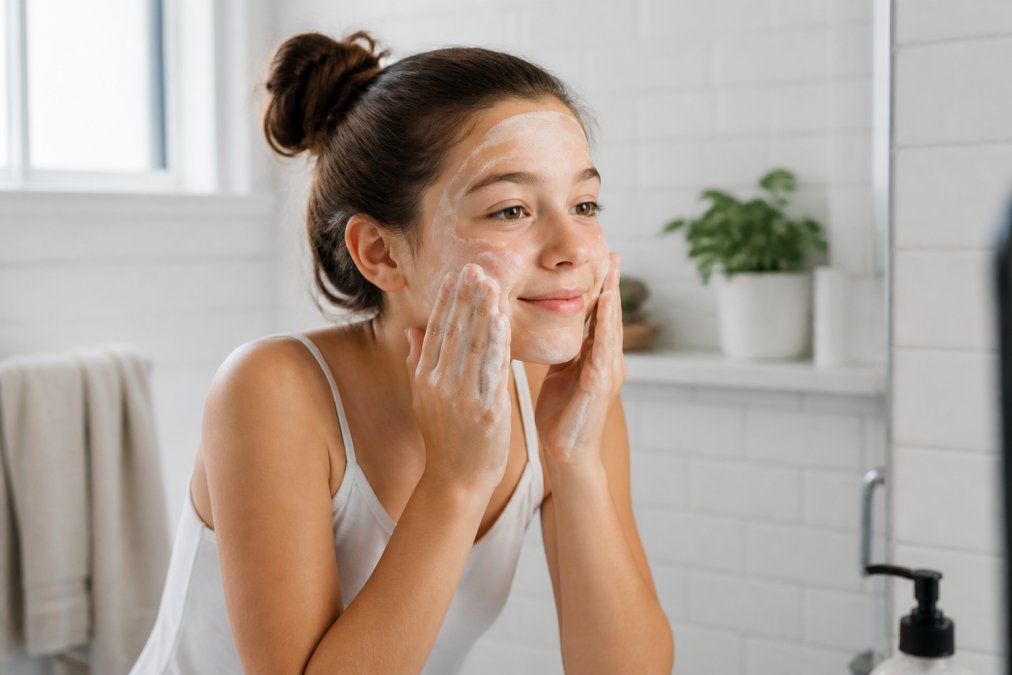
Step 1: Cleanse Gently, Morning and Night
Cleansing removes daily dirt, excess oil, and environmental buildup without disrupting the skin's natural pH balance. The biggest mistake most tweens make is scrubbing too hard or using a cleanser designed for adult acne. Harsh foaming cleansers with high concentrations of salicylic acid or benzoyl peroxide will over-dry young skin, triggering more oil production as compensation.
Look for a pH-balanced, gentle cleanser. Wash with lukewarm water, not hot. Use fingertips, not a rough cloth. Rinse thoroughly and pat dry. The Journee Bloom Glow Wash ($28) is a gentle daily cleanser for every skin type that removes oil and buildup without leaving the skin feeling tight or stripped.

Step 2: Moisturize With a Lightweight Formula
Every skin type needs moisture, including oily skin. Skipping moisturizer on oily skin signals to the sebaceous glands that the skin is dehydrated, which increases oil production and worsens breakouts. The right moisturizer for a 12-year-old is lightweight, non-comedogenic, and water-based or gel-based.
Apply a small amount to the face and neck after cleansing, while the skin is still slightly damp. The Journee Bloom Glow Cream ($26) is a lightweight daily moisturizer formulated with goat milk and designed to absorb quickly without feeling greasy, making it appropriate for combination and oily skin types common in tweens.
Step 3: Protect With Mineral Sunscreen Every Morning
Sun protection is the single most impactful skincare habit a 12-year-old can build. According to the Skin Cancer Foundation's guidance on sun protection, a significant portion of lifetime UV exposure occurs before age 18. Mineral sunscreen, which uses zinc oxide or titanium dioxide to physically block UV rays, is the dermatologist-recommended choice for young, sensitive skin.
Choose SPF 30 at minimum and apply after moisturizer every morning, regardless of cloud cover.
Safe Skincare Ingredients for Teens (and What to Avoid)
The ingredient list on a skincare product tells you everything about whether it belongs in a tween's routine.
Dermatologist-Approved Ingredient Glossary for Young Skin
These ingredients are appropriate for pre-teen and teen skin:
- Glycerin: A humectant that draws water into the skin. Gentle and effective.
- Niacinamide: A form of vitamin B3 that calms redness, supports the skin barrier, and helps regulate excess oil.
- Centella asiatica: A botanical ingredient with soothing and anti-inflammatory properties.
- Hyaluronic acid: A water-binding molecule that hydrates without adding oil or clogging pores.
- Zinc oxide: The active ingredient in mineral sunscreen. Provides broad-spectrum UV protection and has a mild anti-inflammatory effect on acne-prone skin.
- Tea tree leaf oil: At low concentrations, it has mild antibacterial properties useful for acne-prone skin.
According to the National Institutes of Health's research on skin barrier function, maintaining the integrity of the skin barrier during adolescence reduces the likelihood of chronic inflammatory skin conditions developing later.

Ingredients to Avoid: Fragrances, Harsh Actives, and More
- Fragrance (synthetic): The leading cause of contact dermatitis in adolescents. Always choose fragrance-free formulas.
- Retinol and retinoids: Designed for adult skin with slowed cell turnover. Causes over-exfoliation and dryness in young skin.
- High-concentration AHAs/BHAs (above 0.5%): Strip the skin barrier and cause chronic irritation.
- Benzoyl peroxide (above 2.5%): Too aggressive for most tween skin. Causes dryness, peeling, and irritation.
- Essential oils: Lavender, peppermint, and citrus oils are common irritants despite their natural origin.
- Alcohol-based toners: Strips moisture and disrupts the skin's pH balance.
If the product is marketed as anti-aging, brightening, or exfoliating, it is almost certainly not appropriate for a 12-year-old.
How to Treat Tween Acne Without Overdoing It
Tween acne deserves a real response, but most responses go too far. The right approach is gentle and targeted.
For daily prevention:
- Use a non-comedogenic cleanser and moisturizer consistently.
- Do not touch the face.
- Change pillowcases twice a week.
For individual blemishes: Spot treatment is more appropriate than whole-face acne products. The Journee Bloom Acne Patches ($12) are star-shaped patches made with centella asiatica and tea tree leaf oil that cover individual spots, protect them from picking, and create a barrier against dirt and buildup.

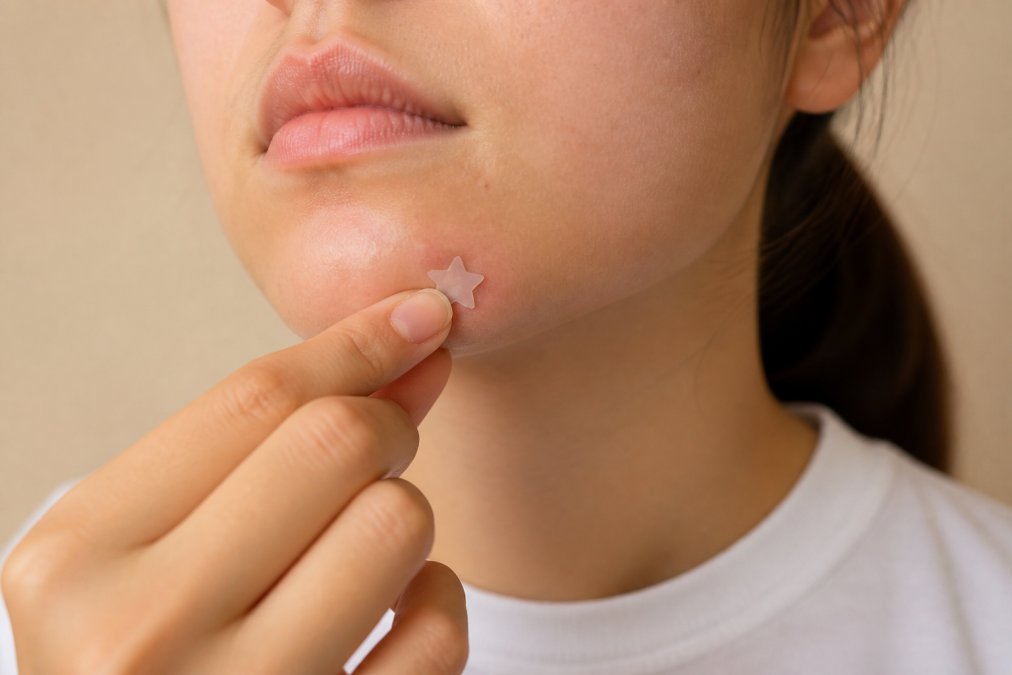
For persistent or cystic acne: A simple routine is not enough. If breakouts are painful, deep, or spreading despite consistent gentle care, a board-certified dermatologist should be involved.
Skincare Tips for 12 Year Olds: Budget-Friendly and Consistent
The most effective skincare routine is the one that actually gets done. Consistency beats complexity every time.
Drugstore Options vs. Tween-Specific Formulas
Drugstore shelves carry many products that work for young skin, but they require careful label reading. A fragrance-free, non-comedogenic gentle cleanser will outperform a trendy adult serum every time. However, drugstore products are not formulated with tween skin in mind.
Tween-specific formulas, like those in the Journee Bloom Glow Kit ($88), remove that guesswork. The full kit includes products designed together as a system for young skin, formulated by esthetician moms who understand the specific needs of this age group.
| Option | Best For | What to Watch |
|---|---|---|
| Drugstore basics | Budget-conscious families | Read labels carefully for fragrance and harsh actives |
| Tween-specific line | Simplified, age-appropriate system | Higher upfront cost, fewer guessing games |
| Adult skincare | Not recommended for 12-year-olds | High risk of over-active ingredients |
Hygiene Beyond the Face
Skincare for tweens extends beyond the face. Puberty affects the whole body, and building good hygiene habits supports overall skin health.
- Body wash: Choose a fragrance-free, gentle formula.
- Lip care: The Journee Bloom Strawberry Glow Balm ($13) uses plant oils and beeswax for conditioning hydration without synthetic fragrance.
- Hands: A basic fragrance-free hand lotion helps combat dryness from frequent handwashing.
- Scalp and hairline: Tweens with oily skin often develop breakouts along the forehead from hair products or infrequent washing. Keeping hair clean and off the face reduces this.
The goal is awareness that skin health is a whole-body habit, not just a face habit.
Building a simple, consistent skincare routine at 12 sets the foundation for healthy skin through the teen years and beyond. Journee Bloom was created specifically to solve this problem, with esthetician mom-formulated products built for tween and teen skin, gentle botanical ingredients, and a complete system that takes the guesswork out of the routine. Shop the Journee Bloom Glow Kit and give your tween a routine they can actually stick with.
Frequently Asked Questions
What is a simple skincare routine for a 12-year-old?
A three-step routine covers everything most 12-year-olds need: a gentle cleanser morning and night, a lightweight moisturizer, and a mineral sunscreen with SPF 30 each morning. That's it. Products should be fragrance-free, non-comedogenic, and formulated for young skin. The Journee Bloom Glow Kit bundles these essentials into one age-appropriate set so there's no guesswork involved.
Are there specific ingredients 12-year-olds should avoid?
Yes. Retinol, glycolic acid, salicylic acid at high concentrations, synthetic fragrances, and alcohol-based formulas are all too harsh for pre-teen skin. These active ingredients can disrupt the skin barrier, cause irritation, and trigger excess oil production. Safe skincare ingredients for teens include centella asiatica, aloe vera, goat milk, and hyaluronic acid, all of which support hydration without stressing young skin.
How do I handle early signs of acne in my 12-year-old?
Start with a pH-balanced, gentle cleanser to remove excess oil without stripping the skin. Avoid scrubbing or picking, which spreads bacteria and worsens breakouts. Acne patches are a practical, hands-off option, Journee Bloom's star-shaped Acne Patches use centella asiatica and tea tree leaf oil to treat individual spots while keeping fingers away from the area. If breakouts persist or spread, consult a board-certified dermatologist.
Is it necessary for a 12-year-old to use anti-aging products?
No. Anti-aging products like retinol, peptides, and high-strength vitamin C are designed for adult skin concerns and are inappropriate for 12-year-olds. Using them at this age can damage the skin barrier and cause long-term sensitivity. The only genuinely preventative step a tween needs is daily sunscreen with SPF 30 or higher, which protects against UV damage, the primary cause of premature skin aging.
What kind of skincare is best for a 12-year-old boy?
Boys at 12 face the same puberty-related skin changes as girls: increased oil production, potential breakouts, and heightened skin sensitivity. A simple routine works just as well: a gentle, fragrance-free cleanser, a water-based or gel-based lightweight moisturizer, and daily mineral sunscreen. The focus should be on skin health and hygiene, not appearance. Keeping the routine short and straightforward makes consistency much easier.
How do I know if my child is ready for a skincare routine?
Most children are ready to start a basic skincare routine around ages 10 to 12, when hormonal changes begin affecting oil production and skin texture. Signs include visible shine on the nose and forehead, small breakouts, or skin that feels rough or uneven. Starting early with a minimal, age-appropriate routine builds healthy habits and prevents damage from harsh products tried out of curiosity.