
Table of Contents
- When Should a Child Start a Skincare Routine
- Why Simple Is Better for Tweens
- Understanding Your Tween's Skin Type
- The 3-Step Simple Skincare Routine for Tweens
- Safe Skincare Ingredients for Kids
- Skincare Tips for 12 Year Olds and Younger Tweens
- Morning vs. Evening Routine Differences
- Common Mistakes to Avoid
- Frequently Asked Questions
Last Updated: September 27, 2026
When Should a Child Start a Skincare Routine
Starting a skincare routine for tweens is less about age and more about when their skin needs it. Many tweens begin noticing changes around age 8 or 9, while others don't see significant shifts until their early teens. The key is watching for signs that a simple skincare routine for tweens would help.
Look for oily patches, occasional breakouts, or dry spots. These are signals that skin is changing. Starting early with a gentle routine teaches healthy habits before problems get worse. A simple skincare routine for tweens doesn't need to be complicated. In fact, simplicity is what works best at this age.
At Journee Bloom, we believe the right time to start is when your child asks about it or when you notice their skin needs support. There's no magic age. Some kids benefit from a routine at 10. Others do fine waiting until 13 or 14. What matters is meeting your child where they are, not forcing a routine before they're ready.

Why Simple Is Better for Tweens
Complicated routines backfire with young skin. Too many products can irritate a developing skin barrier. More steps don't equal better results. In fact, the opposite is often true.
But there's a deeper reason simplicity matters for tweens right now: the pressure to use adult-level skincare is unprecedented. Social media trends, often called the "Sephora Kids" phenomenon, expose tweens to anti-aging serums, retinoids, and multi-step routines designed for adults. Influencers and beauty content creators normalize elaborate 10-step routines as the standard. For tweens already navigating social comparison and body image concerns, this creates unnecessary anxiety about their skin.
A simple skincare routine for tweens works because it focuses on what actually matters: cleansing, hydration, and sun protection. These three steps address the core needs of young skin. Everything else is noise, and often harmful noise at that.
The psychological benefit of simplicity: Tweens also need routines they'll actually stick with. A five-step process feels overwhelming. A three-step routine feels doable. When skincare feels manageable, kids are more likely to do it consistently. Consistency beats complexity every single time.
There's another benefit to simplicity that directly counters social media pressure: it protects your child's confidence. A routine with many steps can feel like their skin is broken and needs fixing. A basic routine sends a different message: this is self-care, not damage control. That distinction matters for how tweens think about their bodies and their worth.
Resisting trending products: Tweens see viral skincare products constantly, sheet masks with celebrity endorsements, "glass skin" serums, retinol treatments marketed to younger audiences. Most of these are unnecessary and some are genuinely harmful for developing skin. A simple routine gives you a framework to say "no" to trends without seeming restrictive. Instead of "you can't use that," you can say "our routine already covers what your skin needs."
Parents play a crucial role here. By modeling a simple routine yourself and explaining why you're not chasing every new product, you teach your tween that skincare is functional, not aspirational. This builds resilience against marketing and social pressure that will only intensify as they age.
Understanding Your Tween's Skin Type
Before building a routine, identify what type of skin your child has. This determines which products will work best.
Normal skin feels balanced. It's not too oily or too dry. Pores are small. There are few breakouts. Normal skin still needs cleansing and sunscreen, but it's the easiest type to care for.
Oily skin gets shiny by midday. Pores look larger. Breakouts happen more often. Oily skin needs a gentle cleanser that removes oil without stripping. Lightweight moisturizers work better than heavy creams.
Dry skin feels tight and uncomfortable. It may flake or feel rough. Dry skin needs hydration and moisture. A gentle cleanser is essential because harsh products make dryness worse.
Combination skin is oily in some areas and dry in others. Many tweens have this type. The T-zone (forehead, nose, chin) is often oily while cheeks are normal or dry. A simple routine handles combination skin well because the basics work for all zones.
Sensitive skin reacts easily to products. It turns red, itches, or burns. Sensitive skin needs fragrance-free, hypoallergenic products. Patch testing new products on a small area first is smart.
Understanding skin type helps you choose the right cleanser and moisturizer. It's the foundation of any simple skincare routine for tweens that actually works.
The 3-Step Simple Skincare Routine for Tweens
A solid routine has three core steps: cleanse, hydrate, and protect. That's it. This approach works for nearly every tween skin type.
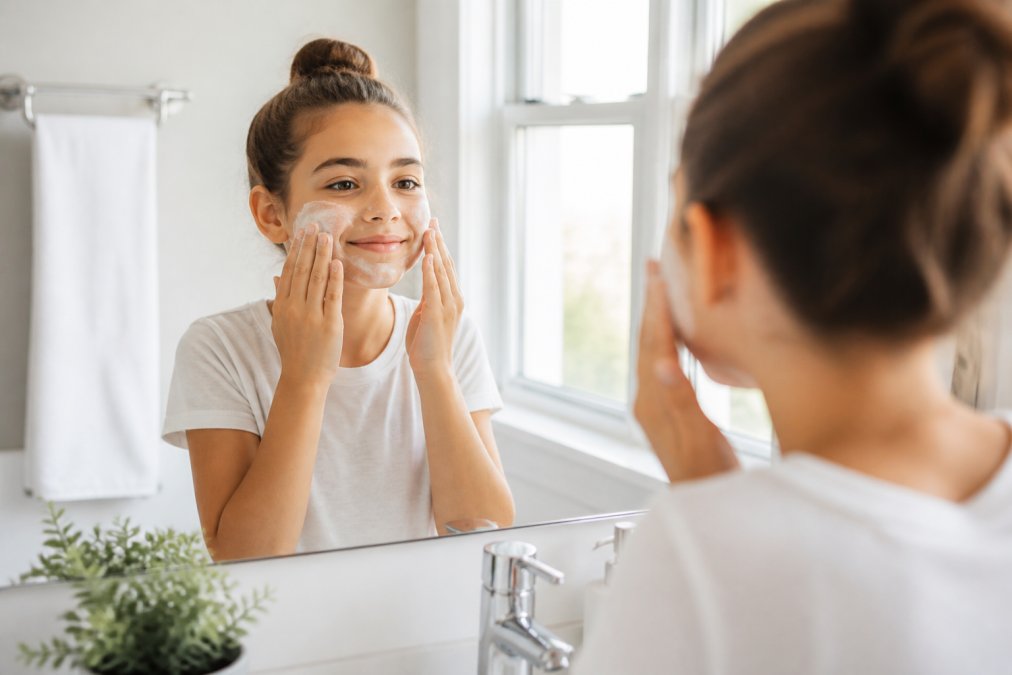
Step 1: Cleanse with a Gentle Cleanser
Cleansing removes dirt, oil, and buildup from the day. But the cleanser matters. A gentle cleanser cleans without damaging the skin barrier.
Harsh cleansers strip skin and leave it feeling tight. They can trigger more oil production as skin tries to repair itself. A gentle cleanser removes what needs to go without overdoing it.
Use a gentle cleanser morning and night. Apply it to damp skin. Massage gently for about 30 seconds. Rinse thoroughly with lukewarm water. Pat dry with a clean towel.
The Journee Bloom Glow Wash is designed for this exact purpose, and it works for every skin type. It removes daily dirt and oil while keeping skin comfortable, never tight or dry.
Step 2: Hydrate and Moisturize
After cleansing, skin needs moisture. Hydration and moisture are different things. Hydration adds water to skin. Moisture locks it in.
A hydrating mist adds that water layer. Apply it right after cleansing while skin is still slightly damp. This helps your skin absorb the next step better.
Then apply a lightweight moisturizer. It should feel soft and absorb quickly. Heavy creams can clog pores in young skin. A lightweight option hydrates without feeling greasy.
The Journee Bloom Hydrating Mist gives that refreshing boost of water. Follow with the Bloom Glow Cream, a lightweight moisturizer made with goat milk and honey. Together, they keep skin soft and comfortable all day.

Step 3: Apply Daily Sunscreen
This step is non-negotiable. Sun damage happens early and adds up over time. SPF 30 minimum is the standard recommendation (the American Academy of Dermatology).
Many tweens skip sunscreen because they think it's only for the beach. That's wrong. Daily sunscreen protects against cumulative damage from regular sun exposure. It prevents dark spots, premature aging, and skin cancer risk.
Use sunscreen every morning, even on cloudy days. Apply it after your moisturizer. Use enough to cover your face and neck.
Safe Skincare Ingredients for Kids
Not all skincare ingredients are appropriate for tweens. Some are too strong. Others can irritate developing skin.
Safe ingredients to look for:
- Goat milk and honey: soothing and nourishing
- Glycerin: hydrating without heaviness
- Niacinamide: calms redness and supports skin barrier
- Hyaluronic acid: holds water in skin for hydration
- Aloe vera: soothing for irritated skin
- Chamomile: gentle and calming
Ingredients to avoid:
- Retinoids: too strong for young skin
- Benzoyl peroxide: can be irritating
- Salicylic acid: only use if specifically recommended for acne
- Essential oils: can irritate sensitive skin
- Fragrance: unnecessary and often irritating
- Alcohol: dries out skin
Skincare Tips for 12 Year Olds and Younger Tweens
Younger tweens need extra care because their skin is still developing. Here are specific tips for this age group, including how to build a routine that works without breaking the budget.
- Gentle cleanser ($5-$8): Look for fragrance-free, hypoallergenic options at drugstores. Brands like CeraVe Foaming Facial Cleanser or Cetaphil Gentle Skin Cleanser are affordable and dermatologist-recommended for young skin.
- Lightweight moisturizer ($6-$10): A basic moisturizer works just as well as premium brands. Look for products with glycerin or hyaluronic acid. Avoid anything labeled "anti-aging" or "advanced."
- Sunscreen ($8-$12): Mineral sunscreen with zinc oxide or titanium dioxide is often cheaper than chemical options. A bottle lasts several months with daily use.
Morning vs. Evening Routine Differences
Morning and evening routines have slightly different goals. Your morning routine wakes skin up and protects it. Your evening routine cleans and repairs.
| Step | Morning Routine | Evening Routine |
|---|---|---|
| Cleanse | Gentle cleanser to remove overnight oils | Gentle cleanser to remove dirt and makeup |
| Hydrate | Optional hydrating mist | Optional hydrating mist |
| Moisturize | Lightweight moisturizer | Lightweight moisturizer |
| Protect | SPF 30 minimum | Skip sunscreen |
Common Mistakes to Avoid
Even with good intentions, parents and tweens make mistakes with skincare routines.
Frequently Asked Questions
What should a 12 year old's skincare routine be?
A 12 year old's skincare routine should focus on three essential steps: cleanse with a gentle cleanser morning and night, hydrate with a lightweight moisturizer, and apply daily sunscreen (SPF 30 or higher). This simple skincare routine for tweens avoids over-complication and harsh actives. The Starter Glow Kit includes everything needed to build these healthy habits without overwhelming young skin.
What ingredients should tweens avoid in skincare?
Tweens should avoid harsh actives like strong retinoids, benzoyl peroxide at high concentrations, and salicylic acid in excess. Skip fragrance-heavy products, alcohol-based toners, and anything labeled for adult acne treatment. Safe skincare ingredients for kids include hypoallergenic, fragrance-free, and non-comedogenic formulas. Look for gentle hydrating ingredients like goat milk, honey, and nourishing oils that support the skin barrier without irritation.
How do I know if my child is ready for a skincare routine?
Most tweens benefit from starting a basic routine between ages 8-12, especially if they notice oiliness, dryness, or early breakouts. Signs of readiness include visible skin changes during puberty, complaints of discomfort, or irritation from environmental factors. When should a child start a skincare routine? When they show interest and skin needs it. Start with just cleansing and moisturizing, then add sunscreen. Keep it simple to build confidence and consistency.
How often should a tween wash their face?
Tweens should wash their face twice daily: once in the morning and once before bed. This removes daily buildup, oil, and impurities without over-cleansing. Use a gentle cleanser that doesn't strip the skin barrier. If your tween gets sweaty from sports or exercise, a quick rinse with water is fine, but save the full cleanser wash for morning and night routines.