
Table of Contents
- Why Safe Skincare Matters for Teen Skin
- Understanding Sensitive Skin in Teens
- Ingredients to Avoid in Teen Skincare
- Building a Simple Skincare Routine for Teens
- How to Treat Teen Acne on Sensitive Skin
- Common Skincare Mistakes Teens Make
- Patch Testing: Your Safety Protocol
- Building Confidence Without Pressure
- Frequently Asked Questions
Last Updated: September 30, 2026
Why Safe Skincare Matters for Teen Skin
Teen skin undergoes hormonal shifts and increased oil production while the barrier is still developing, which is why safe skincare for sensitive teen skin requires a different approach than adult routines.
A single harsh product can trigger inflammation lasting weeks. Many teens use adult formulas or aggressive treatments without realizing their skin is uniquely vulnerable to barrier damage.
A routine built around gentle cleansing, hydration, and sun protection prevents most problems. Consistency and the right ingredients matter far more than complexity or cost.
This guide walks you through exactly how to build safe skincare for sensitive teen skin that actually works, and that teens will stick with because it feels manageable, not like a chore.
Understanding Sensitive Skin in Teens
Sensitive skin describes how skin reacts to common irritants, redness, tightness, itching, or burning. The underlying issue is usually a compromised skin barrier.
The skin barrier is a protective layer of lipids and dead skin cells. When damaged by over-cleansing, harsh actives, or frequent product changes, sensitivity follows. Teen skin is naturally more delicate than adult skin.
How to Identify Sensitive Skin
Sensitive skin shows persistent redness, tightness after cleansing, or stinging and burning from certain products.
Patch test by applying a small amount to the inner arm or behind the ear and waiting 24 hours. If redness, itching, or irritation appears, the product isn't suitable for this skin.
Sensitive skin can overlap with any skin type. Match products to the actual skin condition, not the type alone.
Common Triggers and the Skin Barrier
Fragrance, high concentrations of actives like retinols and acids, and over-cleansing with hot water damage the skin barrier.
Harsh products kill beneficial bacteria that protect skin health. Dermatologist-tested, gentle formulas preserve the microbiome and reduce sensitivity.
Non-comedogenic products prevent pore-clogging; hypoallergenic products minimize allergic reactions. Both are useful filters when shopping, though neither guarantees no irritation.
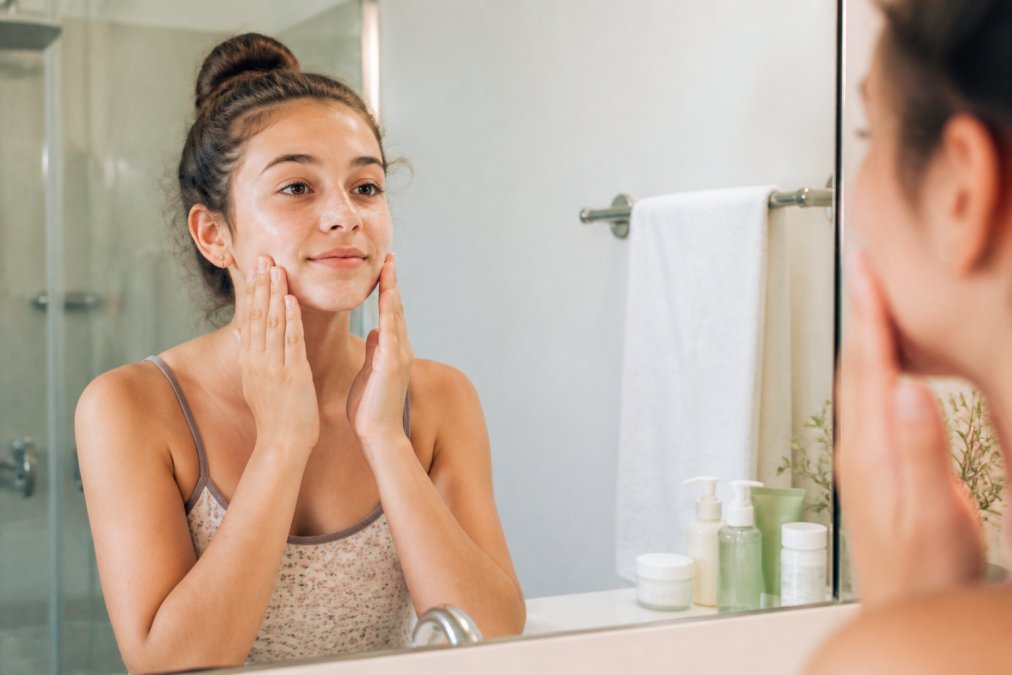
Ingredients to Avoid in Teen Skincare
High concentrations of retinoids, AHAs, and BHAs are too strong for developing skin and can disrupt the barrier.
Synthetic fragrance, alcohol-based toners, and sulfates all strip the barrier and damage the skin microbiome.
Essential oils like menthol, eucalyptus, and peppermint damage the barrier despite feeling refreshing. Benzoyl peroxide is too drying unless recommended by a dermatologist.
Avoid heavy silicones and multi-step routines with conflicting actives. Simplicity and gentleness matter more than a cabinet full of treatments.
Building a Simple Skincare Routine for Teens
A safe skincare routine for sensitive teen skin has four steps: cleanse, hydrate, moisturize, and protect. This structure supports the barrier and keeps things simple enough to stick with.
Consistency matters more than complexity. The Starter Glow Kit from Journee Bloom includes everything needed to start, plus video tutorials for each step.

Step 1: Cleanse Gently
Use a gentle cleanser that feels comfortable, not squeaky. The Glow Wash from Journee Bloom works for every skin type, including sensitive skin, and removes daily buildup without stripping.
Massage the cleanser onto damp skin for 30-45 seconds, focusing on the T-zone. Rinse with lukewarm water, as hot water irritates sensitive skin.
Cleanse twice daily: once in the morning to remove overnight oil buildup, and once at night to remove dirt, sunscreen, and makeup. Over-cleansing, more than twice daily or using harsh scrubs, damages the barrier and triggers sensitivity. Clean should feel comfortable, never tight or squeaky.
Step 2: Hydrate and Moisturize
Hydration and moisturization are different steps. Hydration means adding water to the skin; moisturization means sealing that water in with oils and butters. Both are essential for sensitive teen skin.
A hydrating serum like the Glow Serum contains hyaluronic acid and panthenol, which draw moisture into the skin. Apply it to slightly damp skin right after cleansing. Follow immediately with a lightweight moisturizer like the Glow Cream, which contains goat milk and nourishing oils to lock in hydration.
This sequence matters. Applying moisturizer to dry skin traps air and doesn't hydrate effectively. Applying serum to dry skin means there's no water for it to hold. The order is: cleanse, apply serum to damp skin, apply moisturizer while skin is still slightly moist.
Use moisturizer morning and night. For teens with very oily skin, a lightweight formula is key, the Glow Cream absorbs quickly and won't leave skin feeling greasy or clogged.
Step 3: Protect with SPF Daily
Sun protection is non-negotiable, even for teens who spend most time indoors. UV exposure damages the skin barrier, triggers inflammation, and accelerates aging. Teens often skip sunscreen because they think it's only for beach days, but daily SPF is a foundational step in any safe routine.
Use a broad-spectrum SPF 30 or higher every single day, rain or shine. Apply it as the last step in your morning routine, after moisturizer has fully absorbed. Reapply every two hours if you're outside, or after swimming or sweating.
Many sunscreens feel heavy or leave a white cast on skin. Look for lightweight, hydrating formulas designed for daily use. Some teens resist sunscreen because it feels like an extra step, but it's the single most effective way to prevent future skin damage and sensitivity.
How to Treat Teen Acne on Sensitive Skin
Acne on sensitive skin requires a gentle approach. Harsh spot treatments and aggressive scrubbing make breakouts worse by damaging the barrier and triggering inflammation. The better strategy is to support skin health through hydration, gentle cleansing, and targeted care.
Most teen acne responds well to consistency and patience. A simple routine with a gentle cleanser, hydrating serum, and lightweight moisturizer often reduces breakouts within 4-6 weeks.
Common Skincare Mistakes Teens Make
The biggest mistake is changing products too frequently. A teen tries something, sees no results after a week, and switches to something else. But skin takes 4-6 weeks to show improvement. Constant switching prevents any routine from working and damages the barrier through repeated irritation.
Patch Testing: Your Safety Protocol
A patch test is a simple way to check whether a new product will irritate sensitive skin before applying it to the entire face. This single step prevents weeks of irritation and barrier damage.
Building Confidence Without Pressure
Safe skincare for sensitive teen skin is about supporting health, not chasing perfection. Skin changes during the teen years. Some breakouts are normal. Some redness is normal. The goal isn't flawless skin; it's calm, hydrated, healthy skin.
| Routine Step | Product Type | Frequency | Purpose |
|---|---|---|---|
| Cleanse | Gentle cleanser | 2x daily | Remove oil and dirt without stripping |
| Hydrate | Hydrating serum | 1-2x daily | Add moisture to skin |
| Moisturize | Lightweight cream | 2x daily | Lock in hydration and support barrier |
| Protect | Broad-spectrum SPF | Daily | Prevent UV damage and sensitivity |
External Resources:
Frequently Asked Questions
What should a 12-year-old use for skincare?
A 12-year-old should start with a gentle cleanser, lightweight moisturizer, and daily SPF, nothing more complex. The Starter Glow Kit covers the core steps with Glow Wash, Bloom Hydrating Mist, and Bloom Glow Cream. At this age, consistency and simplicity matter far more than active ingredients. A basic routine supports the skin barrier and builds healthy habits without overwhelming young skin.
How do I know if a skincare product is safe for my teen?
Look for products labeled fragrance-free, hypoallergenic, non-comedogenic, and dermatologist-tested. Check the ingredient list for harsh sulfates, alcohol, synthetic fragrance, and strong actives like retinoids that can irritate young skin. Always patch test new products on a small area first and wait 24-48 hours before using them on the full face. If a product causes redness, stinging, or breakouts, stop using it immediately and return to a simpler routine.
Which ingredients should teens with sensitive skin avoid?
Teens with sensitive skin should avoid sulfates, synthetic fragrance, alcohol, strong essential oils, and aggressive active ingredients like high-strength retinoids or acids. These can disrupt the skin barrier and cause inflammation. Also skip pore-clogging ingredients if acne-prone. Instead, choose products with gentle hydrators like hyaluronic acid, soothing botanicals, and barrier-supporting ingredients. Reading labels carefully and choosing products specifically formulated for sensitive skin reduces the risk of irritation.
Can gentle skincare actually treat teen acne?
Yes. Gentle skincare addresses acne by keeping the skin barrier healthy, reducing inflammation, and preventing irritation that worsens breakouts. A simple routine with a hydrating cleanser, lightweight moisturizer, and SPF supports skin health and prevents the harsh over-treatment that often backfires. For stubborn acne, a dermatologist can recommend safe, targeted treatments that work alongside a gentle base routine. The key is supporting skin health first, not stripping it with harsh products.
Why is SPF important for teen skincare?
Daily sun protection is critical for teen skin because UV exposure causes inflammation, worsens acne and sensitivity, and sets the foundation for long-term skin damage. Teens often spend hours outdoors, making sun sensitivity a real concern. A lightweight, non-comedogenic SPF prevents sun damage without clogging pores or causing breakouts. Consistent sun protection is one of the most important preventative steps teens can take for long-term skin health.
How do I get my teen to stick with a skincare routine?
Keep the routine simple, just three steps (cleanse, hydrate, moisturize) takes less than five minutes. Make it feel like self-care, not a chore, by choosing products with pleasant textures and including fun extras like sheet masks or under-eye patches. Let your teen choose products they like and involve them in the decision. Consistency builds confidence; when they see their skin improve, motivation follows naturally. The Starter Glow Kit includes accessories and video tutorials that make routines feel special and approachable.