
Table of Contents
- Why Teens May Need Benzoyl Peroxide Alternatives
- Comparison Table: Top Benzoyl Peroxide Alternatives for Teen Acne
- Salicylic Acid for Teen Acne: How It Works and Who It Suits
- Azelaic Acid for Teen Acne: A Gentle Option for Sensitive Skin
- Adapalene, Niacinamide, and Other Non-Benzoyl Peroxide Actives
- Building a Gentle Teen Acne Routine Without Benzoyl Peroxide
- How Long Does It Take for Acne Treatment to Work?
- When to See a Dermatologist for Teen Acne
- Frequently Asked Questions
Last Updated: October 6, 2026
Why Teens May Need Benzoyl Peroxide Alternatives
Benzoyl peroxide works, but not for everyone.
Benzoyl peroxide kills acne bacteria but also strips the skin barrier, and young skin is thinner and more reactive than adult skin.
Peroxide also bleaches fabric, towels, sheets, and hoodies come out with orange spots. For a teenager already self-conscious about their skin, that's one more reason to stop.
Below, we break down the best alternatives to benzoyl peroxide for teens, what each does, and how to build a routine that sticks.
Comparison Table: Top Benzoyl Peroxide Alternatives for Teen Acne
| Active | Best For | How It Works | Watch Out For |
|---|---|---|---|
| Salicylic acid | Blackheads, clogged pores | Loosens dead skin inside pores | Dryness if overused |
| Azelaic acid | Sensitive, redness-prone skin | Calms inflammation, clears pores | Slow results |
| Adapalene | Stubborn, persistent acne | Speeds cell turnover | Purging phase |
| Niacinamide | Oil control, barrier support | Regulates oil, soothes | Rare flushing |
| Mandelic acid | Very sensitive skin | Gentle exfoliation | Mild results |
A dermatologist can help match an active to your teen's acne type, especially if over-the-counter options stall. The American Academy of Dermatology's acne resource center is a solid starting point for understanding severity levels before you shop.
Salicylic Acid for Teen Acne: How It Works and Who It Suits
Salicylic acid is a beta hydroxy acid that dissolves the oil and dead skin cells plugging a pore. It's the most common over-the-counter swap for benzoyl peroxide and suits teens with blackheads, whiteheads, and mild inflammatory acne.
It's oil-soluble, so it travels into the pore lining rather than sitting on the surface, useful for the oily T-zone many teens develop during puberty.
Concentration matters most: a 0.5% to 2% salicylic acid cleanser is plenty for a teenager. Higher percentages don't clear skin faster, they just irritate it.
What to Look for in a Salicylic Acid Product
- Concentration: 0.5% to 2%, no higher for beginners
- Format: A rinse-off cleanser is gentler than a leave-on for first-timers
- Extras: Look for soothing ingredients like centella or panthenol
- Avoid: Alcohol-heavy toners and scrubs with rough beads
Start with once daily, then build up. If your teen's skin feels tight or flaky after a week, drop to every other day.
Azelaic Acid for Teen Acne: A Gentle Option for Sensitive Skin
Azelaic acid is a dicarboxylic acid that calms inflammation and clears pores without the sting of stronger actives. It's our first pick when a teen has redness, rosacea-like flushing, or skin that reacts to everything.
It also plays well with others, sitting alongside a gentle cleanser and moisturizer without a fight. Results take longer than peroxide, often six to eight weeks, but with far less irritation.
Azelaic Acid vs Salicylic Acid: Which One First?
Choose azelaic acid if the main issue is redness, sensitivity, or post-inflammatory marks. Choose salicylic acid if the main issue is clogged pores and blackheads.
If you're unsure, azelaic acid is the safer first try for very reactive skin. You can always add salicylic acid later.
Adapalene, Niacinamide, and Other Non-Benzoyl Peroxide Actives
Adapalene comes in 0.1% gel or cream and 0.1% lotion. The lotion suits dry or reactive skin; the gel suits oily skin.
It comes with a purging phase: for the first two to six weeks, breakouts can look worse before they improve, because adapalene pushes existing clogs to the surface faster.
Adapalene also makes skin more sun-sensitive, so daily sunscreen matters more, not less.
Niacinamide is a form of vitamin B3 that regulates oil and supports the skin barrier.
Mandelic acid is an alpha hydroxy acid with a larger molecule than glycolic acid, so it penetrates slowly and suits very sensitive skin.
Here is how the alternatives compare head to head, which most roundups skip:
| Active | Best acne type | Mechanism | Typical timeline | Main limitation |
|---|---|---|---|---|
| Salicylic acid | Blackheads, whiteheads, mild inflammatory acne | Oil-soluble; dissolves the plug inside the pore | 4-8 weeks | Dryness if overused |
| Azelaic acid | Redness-prone, sensitive, post-inflammatory marks | Calms inflammation; clears pores gently | 6-8 weeks | Slow; subtle on deep acne |
| Adapalene | Stubborn, recurring, comedonal acne | Speeds cell turnover; prevents new clogs | 8-12 weeks | Purging phase; sun sensitivity |
| Niacinamide | Oil control, barrier support | Regulates oil; soothes | 4-6 weeks | Not an acne active on its own |
| Mandelic acid | Very sensitive skin, mild congestion | Gentle, slow surface exfoliation | 6-10 weeks | Mild results |
If your teen's skin is dry or easily irritated, a gentle base makes any active easier to live with. Our Glow Wash works for every skin type and cleanses without stripping, which matters when you are layering an active on top.
Building a Gentle Teen Acne Routine Without Benzoyl Peroxide
A gentle teen acne routine without benzoyl peroxide follows the same logic as any good routine: cleanse, treat, moisturize. The difference is what you leave out, no harsh scrubs, no alcohol toners, no stacking three actives at once.
Consistency beats intensity: one gentle active every night for eight weeks beats three strong products for ten days.
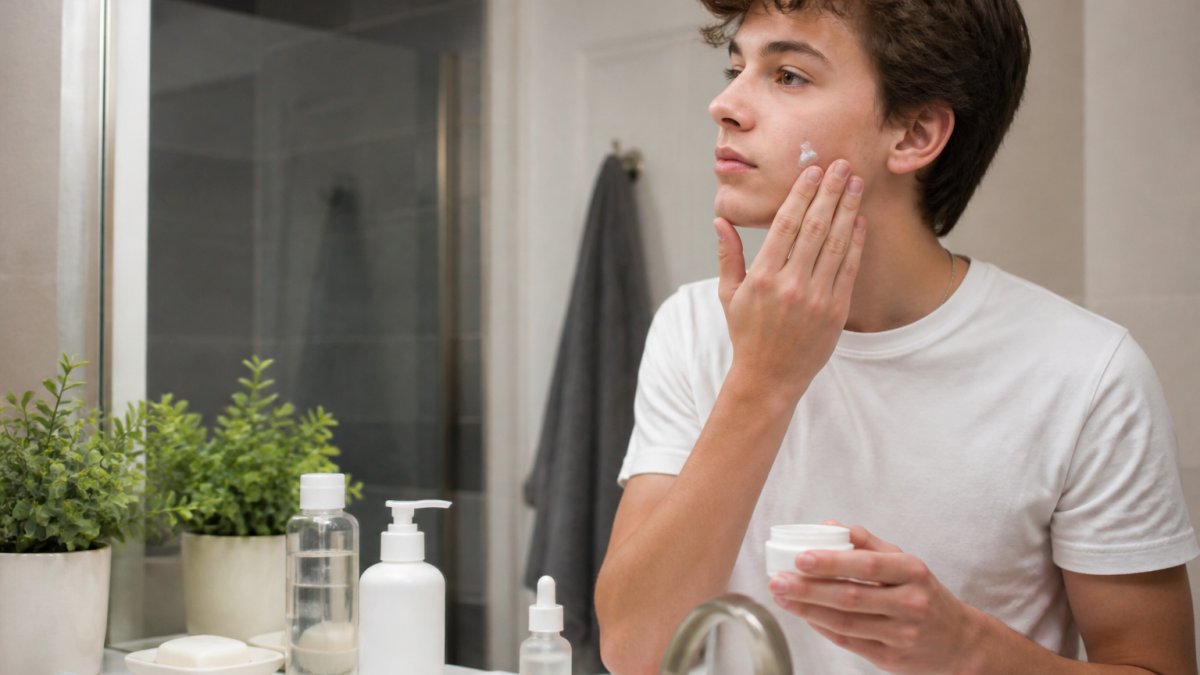
A Simple Three-Step Routine for Beginners
- Cleanse. Use a gentle cleanser morning and night. Our Glow Wash works for every skin type and will not leave it tight.
- Treat. Apply one active, such as salicylic acid or azelaic acid, to the whole face at night. Start every other night.
- Moisturize. Follow with a lightweight moisturizer like our Glow Cream. Skipping this step is the most common mistake we see.
For unexpected spots, our Acne Patches cover a blemish and keep fingers off it, which matters more than any single active.


How to Introduce an Active Without Triggering a Reaction
Most irritation comes from starting too fast, not from the active itself. A workable schedule:
- Week 1: Apply the active two nights a week, over a thin layer of moisturizer if skin is dry.
- Week 2: Move to three nights a week if there is no stinging, peeling, or new redness.
- Week 3-4: Move to every other night if skin is calm.
- Week 5+: Move to nightly only if the previous step was well tolerated.
If any step causes burning, tightness, or flaking lasting more than a day, drop back one step for a week. There's no prize for reaching nightly use faster.
How to Recognize Irritation vs. Purging
This distinction decides whether a routine survives.
- Purging shows up as new blackheads, whiteheads, or small pimples in the same areas where your teen already breaks out. It starts within the first two to four weeks and fades.
- Irritation shows up as redness, stinging, burning, peeling, or breakouts in new areas, cheeks, jawline, or around the eyes. It can start any time and gets worse with continued use.
Purging means keep going. Irritation means stop, simplify to cleanser and moisturizer for a week, then restart at a lower frequency.
Ingredient Combinations That Work, and Ones That Don't
- Safe together: Niacinamide with any active; moisturizer with any active; sunscreen every morning.
- Use on alternating nights: Adapalene and salicylic acid; adapalene and azelaic acid; salicylic acid and mandelic acid.
- Avoid together: Two exfoliating acids on the same night; adapalene with a strong AHA or BHA in the first month; any active layered over a drying alcohol toner.
When to Bring in a Parent or Clinician
A teen shouldn't manage a prescription-strength routine alone. Bring in a parent or guardian when:
- The routine involves adapalene, prescription retinoids, or antibiotics.
- Acne is painful, deep, or leaving marks that do not fade.
- A teen is picking or squeezing to the point of scabbing.
- Mood, sleep, or school attendance is being affected by acne.
- Nothing has improved after twelve weeks of consistent over-the-counter use.
A parent's role isn't to police the routine but to track what was used, for how long, and what changed, exactly what a clinician needs to adjust treatment.
How Long Does It Take for Acne Treatment to Work?
Most over-the-counter acne treatments take six to eight weeks to show clear results and up to twelve weeks for full improvement, the single biggest reason teens give up.
Weeks one to two are often the worst: skin may purge, flake, or look angrier before it calms. This is normal with retinoids and acids, and it passes.
A realistic expectation is this: by week four, inflammation should be settling. By week eight, most teens see a visible difference in the number of new breakouts. If nothing has changed by week twelve, that's the signal to see a dermatologist.
When to See a Dermatologist for Teen Acne
See a dermatologist if acne is painful, scarring, or affecting your teen's confidence, or if nothing improves after twelve weeks of consistent over-the-counter use. Persistent acne, deep nodules, and cysts need prescription treatment.
The American Academy of Dermatology's guidance on when to see a dermatologist is clear that early treatment of severe acne reduces scarring risk. Don't wait a year hoping it settles.
Prescription options include stronger retinoids, oral antibiotics, and other treatments a doctor can tailor to your teen's skin. Over-the-counter alternatives are a starting point, not a substitute for medical care when acne is moderate to severe.
Frequently Asked Questions
What is the best alternative to benzoyl peroxide for teen acne?
Salicylic acid and azelaic acid are two of the most researched alternatives for teen acne. Salicylic acid helps clear clogged pores and reduce blackheads and whiteheads, while azelaic acid targets inflammatory acne and redness with less irritation. Adapalene, a retinoid available over the counter, is another option for persistent breakouts. The right choice depends on your teen's skin type and how sensitive their skin is.
Is azelaic acid safe for teenagers with acne?
Azelaic acid is generally well tolerated by teenagers and is often recommended for sensitive or easily irritated skin. It helps with inflammatory acne, redness, and clogged pores without the dryness that stronger actives can cause. Start with a lower concentration once daily and build up slowly. If irritation persists, stop use and check with a dermatologist.
Can salicylic acid help teen acne?
Yes. Salicylic acid is an oil-soluble hydroxy acid that penetrates clogged pores to help clear blackheads and whiteheads. It is available in cleansers, spot treatments, and serums. For teen skin, a gentle cleanser with salicylic acid used once daily is often enough. Overuse can dry out the skin barrier, so start slow and pair it with a non-comedogenic moisturizer.
How long does it take for an acne treatment to work?
Most over-the-counter acne treatments need six to eight weeks of consistent use before you see clear improvement. Some teens notice less oil or fewer new pimples within two to three weeks, but full results take longer. If there is no improvement after three months, or if acne gets worse, it is time to see a dermatologist for a prescription treatment.
When should a teen see a dermatologist for acne?
A dermatologist visit is a good idea if acne is painful, widespread, or leaving dark spots and scars. Also seek help if over-the-counter alternatives to benzoyl peroxide have not worked after three months, or if acne is affecting your teen's confidence. A dermatologist can prescribe stronger treatments like topical retinoids or oral medications that are appropriate for their age and skin.
Teen acne is stubborn, and finding an active that doesn't irritate young skin takes patience. Journee Bloom builds gentle, botanical-based products designed specifically for tweens and teens, from our Glow Wash cleanser to our Glow Cream moisturizer and fun acne patches that keep hands off blemishes. Every formula is esthetician mom formulated and made for young, developing skin. Get started with Journee Bloom and give your teen a routine they'll actually stick with.